BGU: simple habitat management can help protect the genetic diversity of animal populations
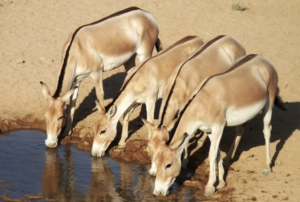
Relatively simple habitat management can influence population genetics, providing conservation managers with the opportunity to support genetic resilience not only through breeding programs or translocations, but also by changing how essential resources are distributed in the wild, thereby avoiding more invasive methods that may harm populations.
A Ben-Gurion University of the Negev research team has demonstrated how resource distribution across a landscape can shape mating structure, reproductive success, and genetic diversity in wild populations, and have presented a practical framework for managers to use resource management to influence genetic diversity non-invasively.
Dr. Shirli Bar-David, Prof. Amos Bouskila and their PhD student Noa Yaffa Kan-Lingwood demonstrated the principle through a case study of the Asiatic wild ass (Equus hemionus) population in the Negev Desert, Israel, which exhibits a resource-defense polygyny mating system, in which reproducing males establish territories near water sources to gain access to females, making water sources particularly important for mating.
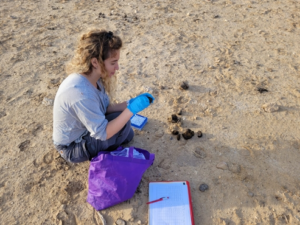
“We found that increasing the number of available water sources from one to three led to a substantial increase in territorial, reproducing males, from 16%–18% before management to 42%–48% afterward,” explains Kan-Lingwood. This was also associated with a significant increase in the population’s variance effective population size (Nev), an important indicator of genetic diversity, from 34.9 to 38.4.
“New reproducing males were observed mainly near the new water sources, suggesting new territorial establishment and indicating that changes in resource distribution can rapidly reshape mating opportunities and improve the genetic representation of individuals in the population,” says Kan-Lingwood.
Dr. Shirli Bar-David adds, “The principle extends to other social species threatened by low population sizes that rely on limited resources. It is an important and encouraging finding in the context of climate change and ongoing species decline.”
Additional researchers included: Dr. Liran Sagi, Prof. Alan R. Templeton, Mrs. Naama Shahar, Mr. Ariel Altman, Ms. Nurit Gordon, Prof. Daniel I. Rubenstein, and Prof. Amos Bouskila. The research was supported by the United States-Israel Binational Science Foundation (Grant No: 2017288) and the Mohamed bin Zayed Species Conservation Fund (Grant No: 232532597).
Their findings were published in the journal Ecological Applications