Ben-Gurion University Launches ‘Prisma Negev,’ a Strategic Center for Innovation and Regional Cooperation
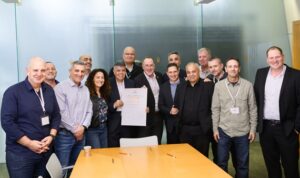
Local authority heads across the Negev, together with representatives from industry, civil society, and academia, have joined a new strategic initiative initiated by President Prof. Daniel Chamovitz to advance development in southern Israel. “Realizing the Negev’s tremendous potential is central to strengthening Israeli society and the national economy,” said Prof. Miki Malul, who heads the initiative. Ben-Gurion University of the Negev has launched ‘Prisma Negev,’ a new center that integrates academic research, data, and applied initiatives to develop practical, scalable solutions that directly impact the lives of residents and communities across the Negev. The initiative brings together more than 40 heads of local government, alongside representatives from industry, civil society, innovation centers, the IDF, and academia.
The launch event, held on Tuesday evening, January 13, 2026, marked the official opening of the strategic center, whose mission is to strengthen regional cooperation, promote high-impact projects, and support informed, data-driven decision-making at the regional level.
The initiative was launched under the leadership of BGU President Prof. Daniel Chamovitz.
“This is a regional strategic partnership that unites local authorities, industry, the military, academia, and civil society,” said Prof. Chamovitz. “Beyond advancing research and education, Ben-Gurion University has a responsibility — rooted in the founding vision of Israel’s first prime minister, David Ben-Gurion — to lead the development of the Negev. ‘Prisma Negev’ will nurture a new generation of researchers, professionals, and entrepreneurs committed to the region’s future.”
Prof. Miki Malul, Head of the Negev Strategy Office at the BGU President’s Office and an expert in economic development, is leading the process.
“Realizing the Negev’s tremendous potential is central to strengthening Israeli society and the national economy,” said Prof. Malul.
The ‘Negev Challenges and Opportunities Map’ was unveiled for the first time at the launch event. This dynamic platform presents key assets, growth potential, and challenges across the region, based on insights gathered directly from local authority leaders. The map will serve as a strategic tool for guiding policy, investment, and collaborative initiatives, enabling data-based decision-making at the regional level and positioning the Negev as a national growth engine.
‘Prisma Negev’ focuses on eight core areas:
Economic development – creating new growth engines, strengthening local businesses and attracting investments.
Education and reducing gaps – advancing educational innovation, linking educational institutions with industry, and expanding access to opportunity for young people.
Employment – aligning academic training with labor market needs and supporting local entrepreneurship.
Society and social innovation – developing new community models, strengthening civil society and implementing solutions to improve quality of life.
Health and Community Wellbeing – addressing health challenges unique to the Negev through innovative solutions and collaborations with health systems.
Civic and community resilience – enhancing crisis preparedness by strengthening community support systems and empowering local authorities.
Technology and society – integrating advanced technologies into education, health and employment systems, while assessing their social impacts.
Tourism – developing the Negev’s tourism infrastructure and strengthening local businesses.
The center’s applied arm includes a social impact incubator and operates through regional forums, pilot programs, professional training, and innovation labs that bring together researchers, students, practitioners, and community leaders. These efforts aim to develop models that can be scaled regionally and nationally. The research arm provides the center’s knowledge base, producing applied research, assessment tools, and data frameworks to support evidence-based policymaking.
Alongside Prof. Malul, who is leading the process, Prof. Michal Krumer-Nevo, Head of the Charlotte B. and Jack J. Spitzer Department of Social Work at BGU, heads the center’s research arm. The leadership team also includes Sharon Tsarfati, Director of ‘Prisma Negev’; Tal Levy, Director of Strategic Partnerships and Communities; and Yehudit Saban, Assistant to the President of BGU for Strategic Affairs.
“Realizing the Negev’s tremendous potential is a central component in strengthening the Israeli economy and society,” said Prof. Malul. “‘Prisma Negev’ is where regional vision becomes action and knowledge becomes impact. With partners across all sectors working together, we are shaping a stronger future for the Negev — and for Israeli economy and society as a whole.”
Beer-Sheva Mayor Ruvik Danilovich, representing the local authorities, said, “The Negev has never had greater opportunities but also has never faced bigger threats. We are serving a strategic interest bigger than all of us – the State of Israel.”