TAU researchers uncover biological mechanism explaining how breast cancer cells invade the brain
A new study led by researchers from the Gray Faculty of Medical and Health Sciences at Tel Aviv University (TAU) for the first time offers a coherent biological explanation for how breast cancer cells manage to “settle” in the brain, one of the most fatal challenges in oncology.
The brain consists of completely different cells than those in the breast. According to the research, the astrocytes in the brain not only don’t prevent cancer cells from reaching the brain, but even help the cancer cells establish themselves there, despite the brain being a “hostile environment” that the cancer cells should not recognize.
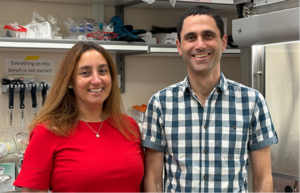
The research was conducted under the leadership of Gray Faculty researchers Professor Uri Ben-David and Professor Ronit Satchi-Fainaro, with the participation of researchers Dr. Katherine Lau and Dr. Sabina Pucci and in collaboration with 14 laboratories across six countries. The results were published on December 29, 2025, in the journal Nature Genetics.
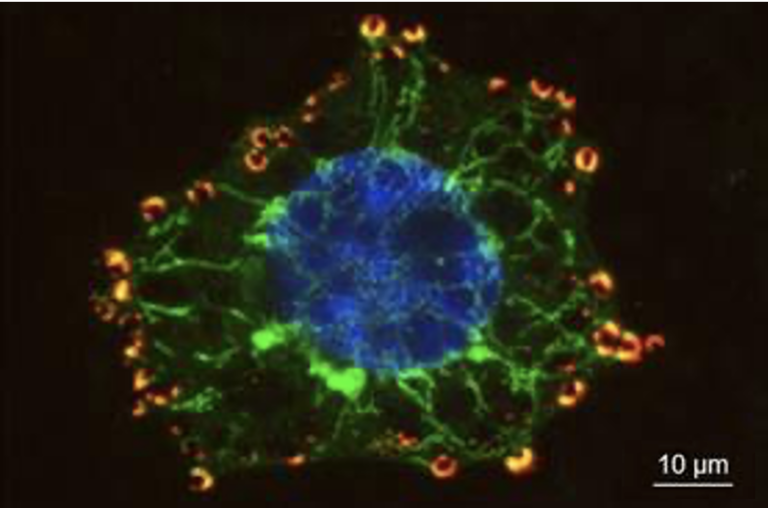
Astrocytes are a subtype of glial cells that make up the majority of cells in the human central nervous system. They perform metabolic, structural, homeostatic, and neuroprotective tasks such as clearing excess neurotransmitters, stabilizing and regulating the blood-brain barrier, and promoting synapse formation.
The new study reveals that the loss of the p53 gene, often called the “guardian of the genome,” triggers metabolic adaptations that allow cancer cells to thrive in the brain environment. It identifies SCD1, a key enzyme in fatty acid synthesis, as a potential therapeutic target. Furthermore, the researchers demonstrate that inhibiting SCD1 significantly reduces the growth of brain metastases in preclinical models, offering new hope for future treatments for breast cancer patients.
Support for the research was provided by the European Research Council, the Israel Science Foundation, the Israel Cancer Research Fund, the Kahn Foundation, and Fundación ”la Caixa.”
Source Tel-Aviv University