Weizmann: even second graders can reason like scientists if we ask them the right way
When a child asks “Why does a blowfish puff up?”, we often jump in with facts. But what if we paused and suggested that they ask instead, “How does a blowfish puff up?” It may seem like splitting hairs, but this small shift in phrasing could help reshape future generations’ capacity for reasoning and critical thought, in science and beyond.
A study from the Weizmann Institute of Science shows that children as young as 2nd grade can offer surprisingly sophisticated scientific explanations for biological phenomena, so long as the question taps into the kind of reasoning that science is built on: Not why, but how.
Explanations that focus on the “how” and reveal mechanisms behind a phenomenon are dubbed “mechanistic.” They highlight the underlying factors and relationships that give rise to various phenomena, making it possible to establish the link between cause and effect so there is no room left for fallacies. In contrast, non-mechanistic reasoning describes the phenomenon without explaining how it comes about. This may take the form of circular explanations, where the question is restated as its own answer, or teleological explanations, which account for a phenomenon by referring to an assumed goal without explaining how it is achieved. For example, to address the question of why a plant grows toward light, a teleological explanation would state: “The plant grows toward the light so it can survive”; mechanistic reasoning, on the other hand, gets to the root: “The plant senses light through its leaves, sends a signal through the stem, and grows in that direction.”
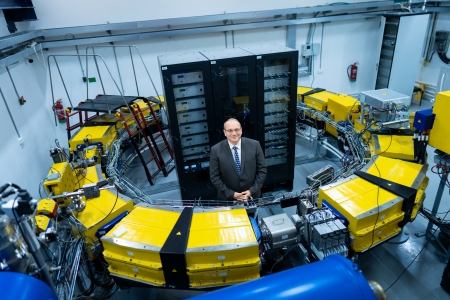
“There were conflicting findings in past research – some studies showed that even five-year-olds can give mechanistic explanations, and others showed that around the same age, kids start using teleological reasoning,” says study leader Prof. Michal Haskel-Ittah of Weizmann’s Science Teaching Department. “We wanted to understand how such different results could come about.” The research team included Haskel-Ittah’s PhD student Yael Shtechman and Prof. Marida Ergazaki from the University of Patras, Greece.
The team sought to find out: Do children have the tools to reason like scientists? And just as importantly – what goes through their mind when they’re faced with the different types of explanations?
The researchers interviewed over 50 children from grades 2 through 6. In the first part of the study, each child was asked to explain a biological phenomenon. In the second part, they were asked to evaluate a set of competing explanation types for other phenomena.
More than half of the children – 68 percent – gave mechanistic explanations, for example: “Every time the blowfish’s heart beats fast, it sucks a lot of air.” The biology may have been off, but the reasoning was clear: a cause, an internal process, and a result. Others gave circular explanations, such as “It just gets, like, round,” or teleological ones: “[If] there is some kind of predator, it puffs up and it looks like a giant monster so that they will stay away.”
The study and its findings offer a new framework for understanding how children make sense of biological evidence, helping to resolve past inconsistencies in research. “A majority of children in our study could produce mechanistic explanations, and this included even second graders,” says Haskel-Ittah. “They didn’t always have the biological facts right – but the structure of their thinking was there.”
When given a choice between explanations, children consistently preferred the mechanistic ones. They didn’t just say “this sounds right” – they backed up their choices using two distinct criteria that the scientists defined as “accuracy” and “explanatory power,” the latter meaning an explanation’s ability to clearly lay out how something works.
Children judged an explanation’s accuracy by matching what they heard with what they already knew: facts they’d picked up from science class, family members or experience. In the course of their assessment, they used logical cues, such as natural principles they were already familiar with, or analogies, for example, comparing a plant growing toward light or water to a person turning around upon hearing someone walking behind them. If an explanation contradicted something they’d learned, they were quick to reject it.
But even more often the children correctly chose the mechanistic explanation because it had strong explanatory power, not just because its content matched what they already knew. They were drawn to answers that gave them a step-by-step sense of cause and effect and often pointed out when an explanation failed to do this, dismissing it with comments like “It doesn’t say how – it just says what happens.”
These insights have implications for science education. “Traditionally, we reward children for being correct,” says Haskel-Ittah. “But we rarely give them feedback on the structure of their explanation – whether it really explains how something happens.”
In other words, school systems tend to measure answers, not thought processes. Whether it’s on homework, a standard test, or even casual feedback from a teacher or parent, students are typically evaluated based on whether what they say is factually right – not how well they reasoned their way there.
So how can educators foster deeper mechanistic thinking?
Focusing solely on correctness may send the wrong message. “If kids are only praised for getting the answer right,” says Haskel-Ittah, “they’ll learn to repeat what they’ve memorized. But if we also highlight how they arrived at that answer – even when it’s not scientifically accurate – we’re showing them that reasoning matters too.” When children offered incorrect but structurally sound answers in the study, those answers weren’t dismissed. Instead, the researchers treated them as scaffolds: opportunities to build on intuitive reasoning by adding accurate biological knowledge.
Another promising approach, Haskel-Ittah explains, is simply to ask better questions. The researchers noted that when children were asked “how” instead of an Aristotelian “why,” they were more likely to search for processes. And when they were gently prompted in that direction – “Yes, but how does that work?” – many were able to expand their answers into fully mechanistic explanations. A future direction the researchers are considering is to help children consciously distinguish between “how” and “why” questions.
Haskel-Ittah believes this process can help in other educational realms, too. As she puts it: “We’re not aiming just for future researchers – we’re aiming to educate all citizens. Because in the end, we don’t only want thinking scientists, we want thinking adults.”
Published on Journal of the learning sciences